SALES PSYCHOLOGY
Dominant Buying Motives
1. Profit or Gain
Saving money, increasing revenue, or driving personal/career advancement.
Customers motivated by profit or gain want to improve their financial position, increase revenue, save money, advance their careers, or achieve a measurable benefit.
2. Fear of Loss
The desire to protect what matters and avoid a potential negative outcome.
Customers motivated by fear of loss are concerned about losing money, security, opportunities, stability, or something they have worked hard to achieve.
3. Comfort and Pleasure
The desire to experience enjoyment, satisfaction, or an improved quality of life.
Customers motivated by comfort and pleasure seek experiences and solutions that make life more enjoyable, relaxing, convenient, or satisfying.
4. Avoidance of Pain
The desire to eliminate an existing frustration, burden, or source of discomfort.
While fear of loss focuses on protecting against a potential negative outcome, avoidance of pain often centers on resolving a problem the customer is already experiencing.
5. Love and Affection
The desire to strengthen relationships, create belonging, and demonstrate care or appreciation.
Customers motivated by love and affection may prioritize family, personal relationships, social connection, customer loyalty, or the well-being of people who matter to them.
6. Pride and Prestige
The desire to achieve recognition, demonstrate accomplishment, or enjoy a sense of distinction.
Customers motivated by pride and prestige may value reputation, achievement, exclusivity, leadership, professional recognition, or the satisfaction of reaching a meaningful milestone.
Applying the Six Dominant Buying Motives
A customer may demonstrate several motives during the same conversation. The objective is to discover which motive matters most in the decision at hand rather than assigning the customer a permanent personality type.
For example, someone considering a business software solution might want to increase profits, avoid operational problems, and save time. The strongest motive depends on that customer's current priorities and circumstances.
An effective sales professional listens for those priorities, asks clarifying questions, and confirms their understanding before recommending a solution.
The Apex Sales Kinetics Principle
Discover the motive. Understand the desired outcome. Connect the value. Confirm the fit.
The purpose of understanding buying motives is not to manipulate a customer's emotions. It is to understand what matters to the customer and help them make an informed decision that genuinely meets their needs.
HUMAN TEMPERAMENT
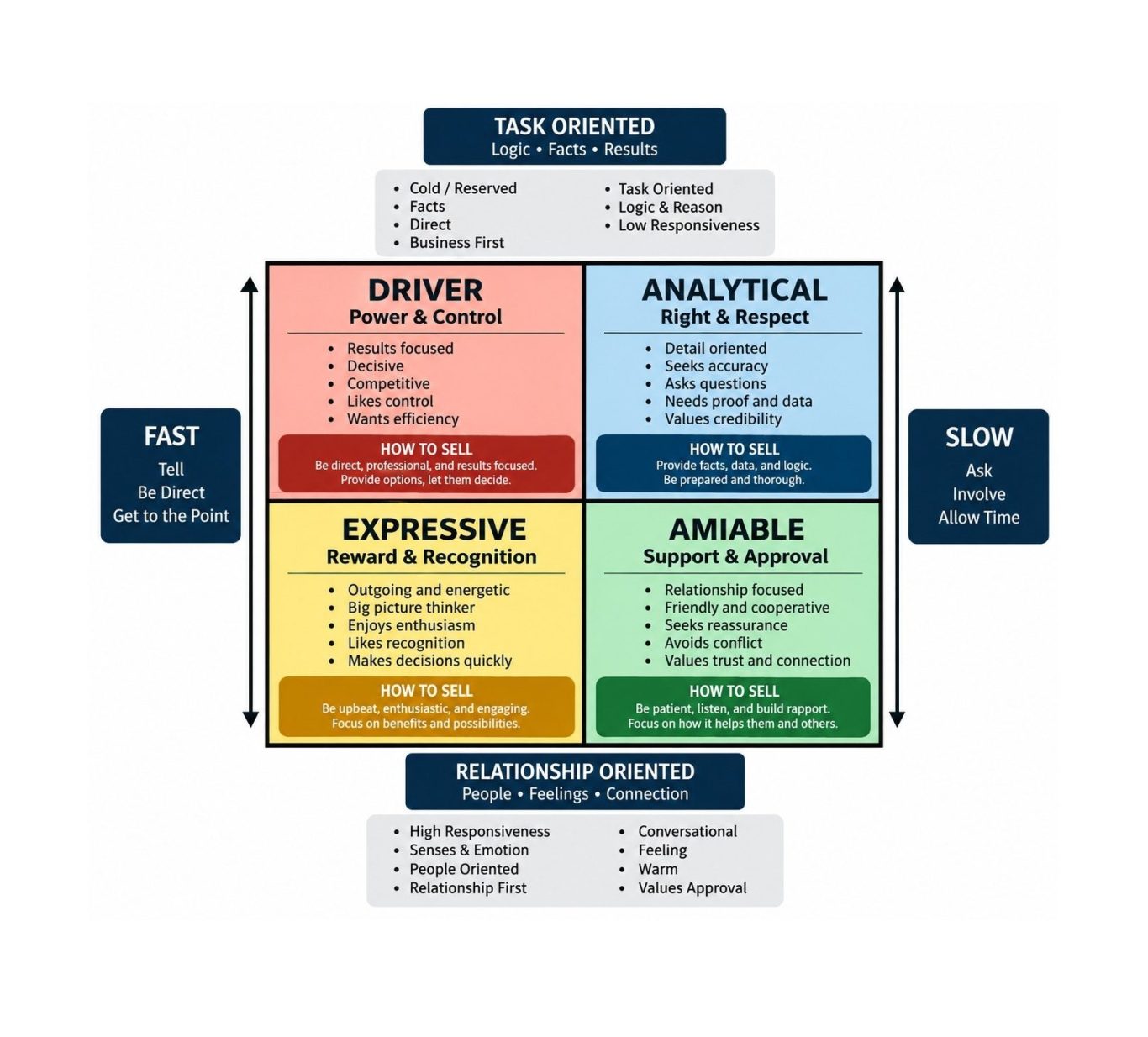
Understanding Human Temperament: Adapt Your Approach
One of the most overlooked skills in sales is recognizing that not everyone thinks, communicates, or makes decisions the same way. Some people want facts while others want results. Some people respond to enthusiasm, while others need trust and reassurance before making a decision. A successful salesperson understands that the same presentation won't connect with every customer the same way. Learning to recognize different communication styles allow you to adjust your pace, questions, language, and presentation to better serve the person in front of you. The goal isn't to change who you are or manipulate others it's to understand them better so you can present in a way that makes more sense and appeals to them.